
Skip to content

Condition

Enlarged Prostate (BPH)

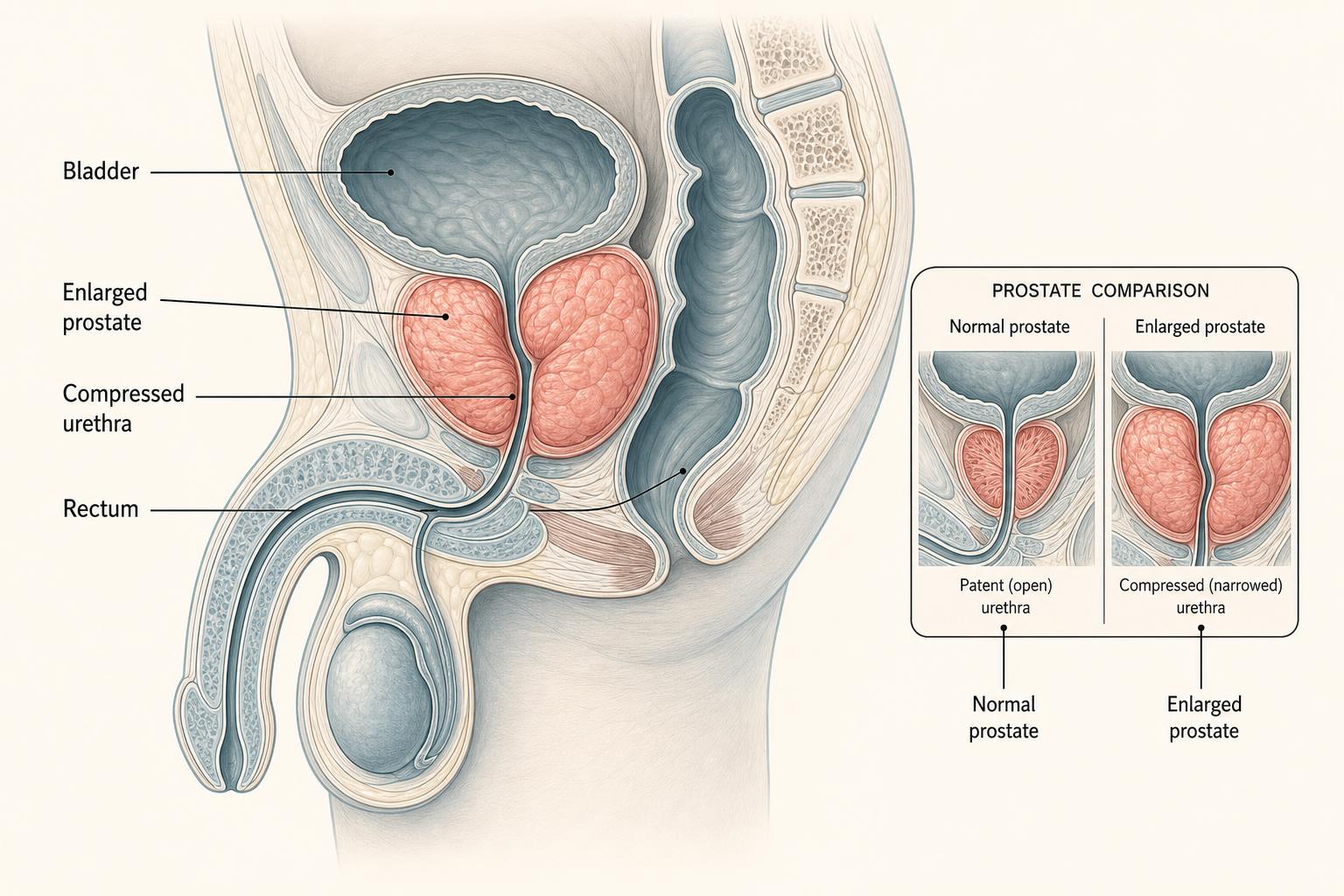
Benign prostatic hyperplasia (BPH) is the non-cancerous enlargement of the prostate that causes bothersome urinary symptoms in most men over 60. Several modern treatments avoid the side effects of TURP.

Pelvic angiogram during prostate artery embolization for an enlarged prostate (BPH)

Overview

  • BPH causes a weak stream, urgency, frequency, nocturia, and incomplete emptying.
  • Untreated BPH can lead to urinary retention, bladder stones, and kidney damage.
  • Image-guided options like prostate artery embolization (PAE) treat BPH without cutting prostate tissue.

Symptoms

  • Frequent urination, especially overnight (nocturia).
  • Weak or interrupted urinary stream, straining to start.
  • Sensation of incomplete bladder emptying.
  • Sudden urgency, occasional leakage, or urinary retention.

How it is diagnosed

  • Symptom score (IPSS) and bladder diary.
  • PSA, urinalysis, and post-void residual measurement.
  • Uroflowmetry and prostate volume on ultrasound or MRI.
  • Cystoscopy when anatomy or stones are a concern.

Treatment options

FAQ

Questions about enlarged prostate (bph)

Answers patients most commonly ask before their consultation.

BPH is non-cancerous enlargement; it does not turn into cancer. The two can coexist, which is why PSA and imaging are still important.

Ready to talk?

Personalized urologic care begins with a conversation.

Schedule a consultation to review your imaging, lab work, and treatment options.