
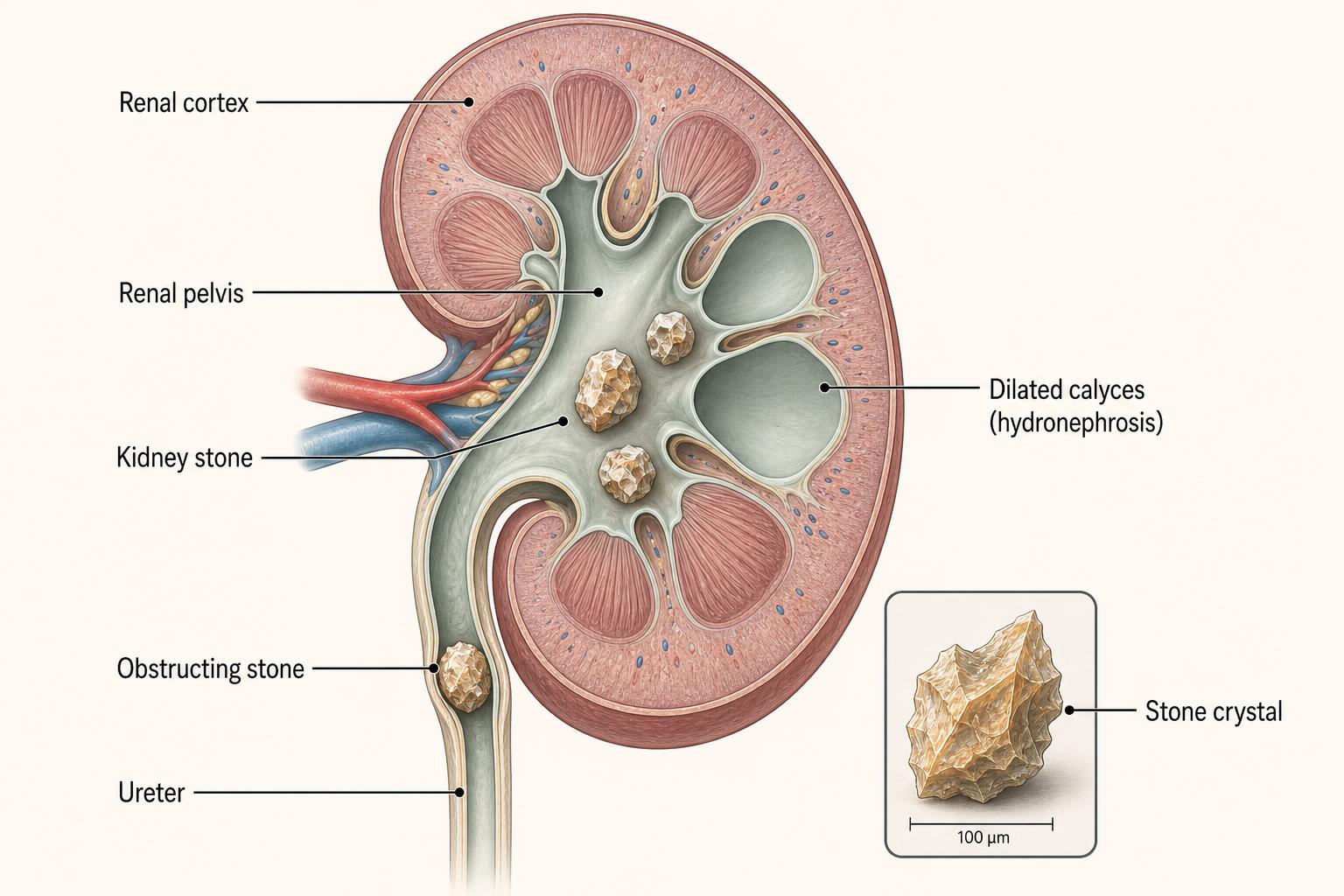
Overview
- Stones form when urine becomes concentrated in stone-forming minerals.
- Most small stones pass with hydration and medication; larger stones need a procedure.
- Identifying the metabolic cause prevents recurrence in most patients.
Symptoms
- Sudden, severe flank or groin pain (renal colic).
- Blood in the urine, nausea, vomiting.
- Burning urination or urinary urgency when a stone is near the bladder.
- Fever, a urgent warning sign of infected obstruction.
How it is diagnosed
- Low-dose non-contrast CT scan to locate and size stones.
- Ultrasound for monitoring and pregnancy-safe evaluation.
- 24-hour urine collection and stone analysis for prevention planning.