
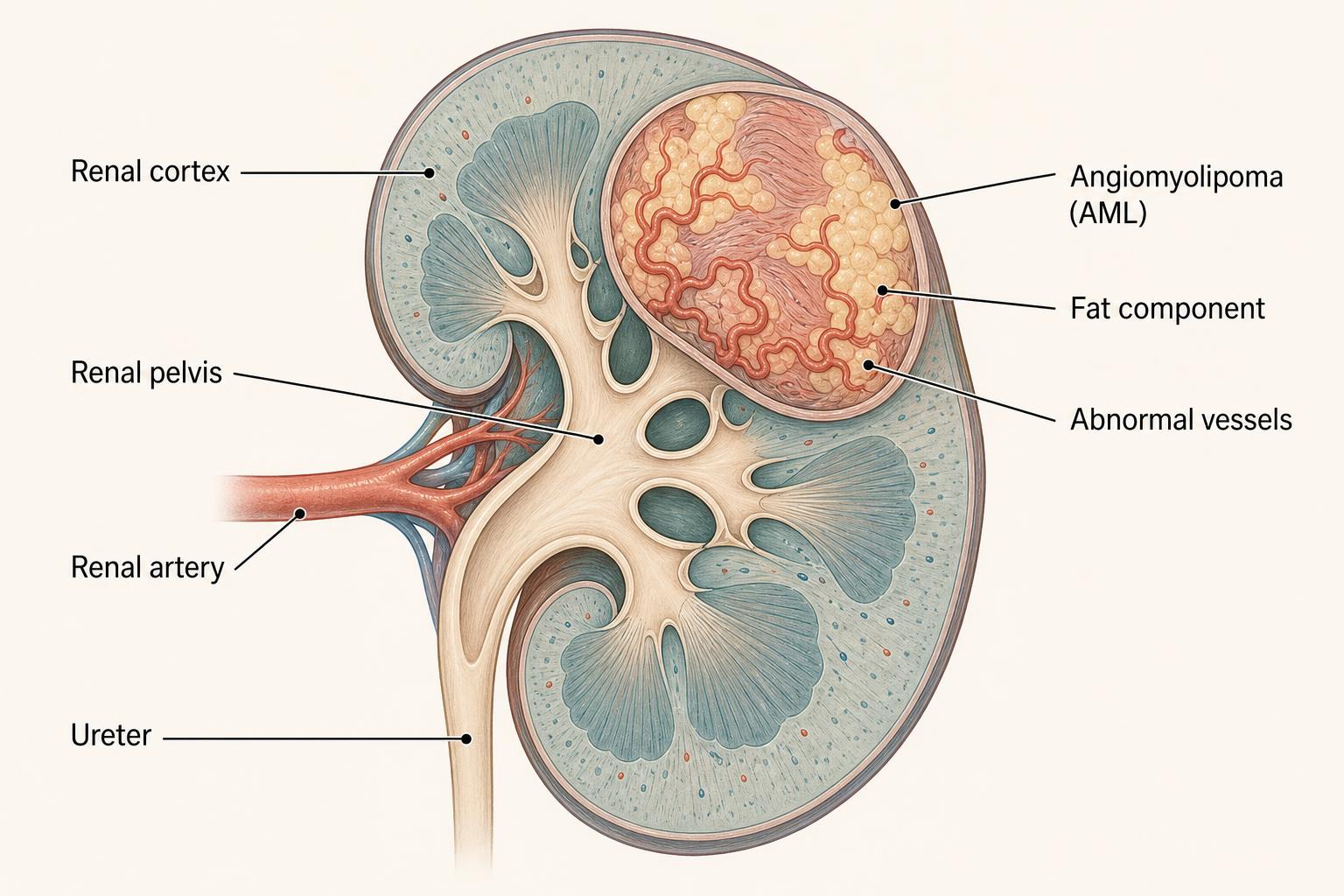
Overview
- Cross-sectional imaging (CT or MRI) can usually distinguish benign AMLs from suspicious solid masses.
- Angiomyolipomas greater than 4 cm or those that have bled are candidates for selective embolization.
- Select small renal masses can be treated with image-guided cryotherapy rather than partial nephrectomy.
Symptoms
- Most renal masses are silent and discovered incidentally.
- Flank or back pain, especially with a large or bleeding AML.
- Visible or microscopic blood in the urine.
- Sudden severe flank pain and low blood pressure can signal AML rupture (Wunderlich syndrome).
How it is diagnosed
- Multiphase CT or MRI with and without contrast.
- AMLs are identified by characteristic fat content on imaging.
- Biopsy when imaging is indeterminate or when malignancy is suspected.
- Tuberous sclerosis evaluation when multiple or bilateral AMLs are present.