
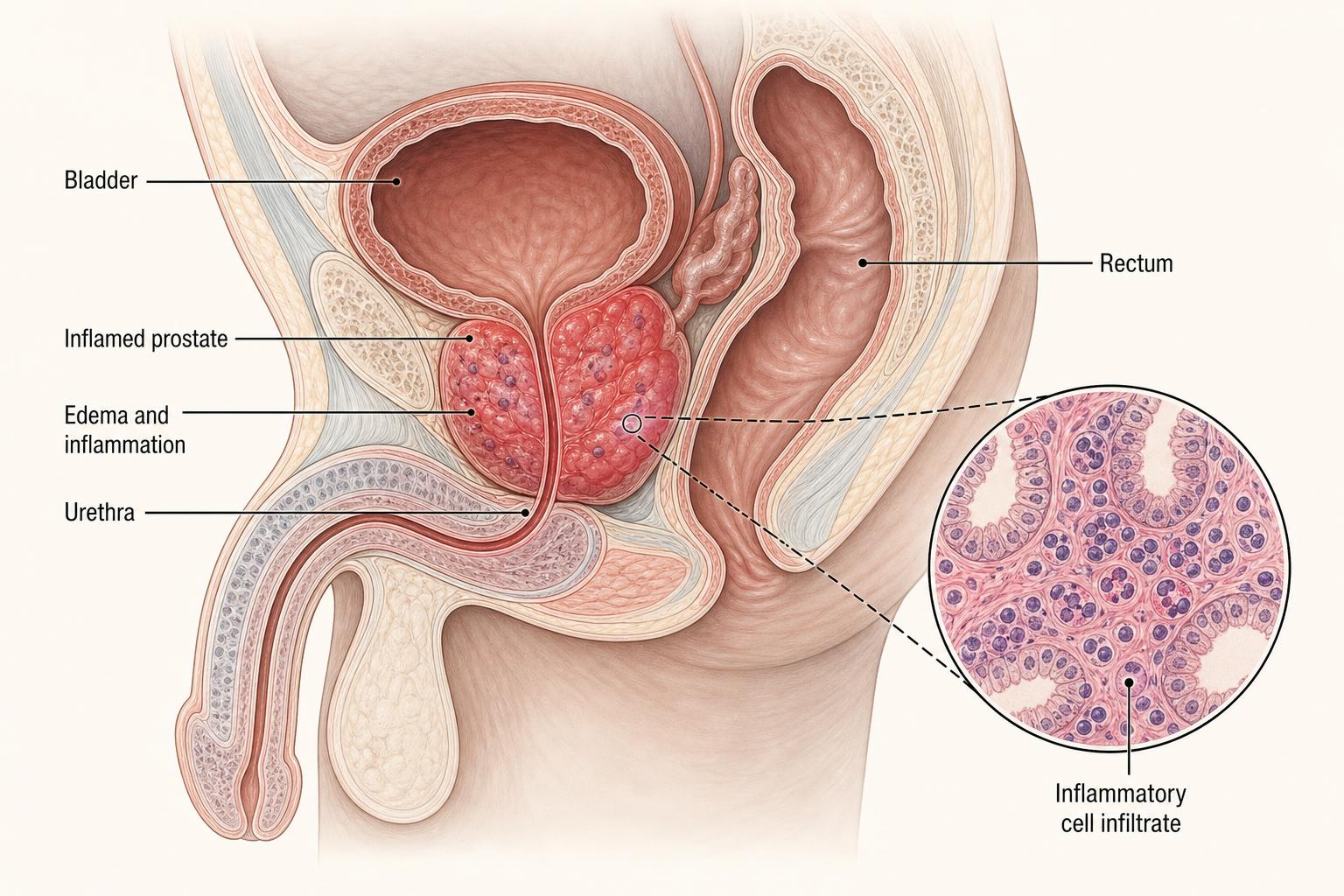
Overview
- Acute bacterial prostatitis is a serious infection that needs prompt antibiotics and evaluation.
- Chronic bacterial prostatitis causes recurrent UTIs from a smoldering prostatic focus and needs an extended antibiotic course.
- Chronic pelvic pain syndrome (CP/CPPS), the most common form, is treated with multimodal therapy, not antibiotics alone.
Symptoms
- Pelvic, perineal, lower-back, or groin pain.
- Burning urination, frequency, urgency, weak stream.
- Painful ejaculation or post-ejaculatory discomfort.
- Fever, chills, and severe symptoms in acute bacterial prostatitis (a medical urgency).
How it is diagnosed
- Symptom score (NIH-CPSI) and focused pelvic exam.
- Urinalysis, urine culture, and post-prostatic massage urine cultures when indicated.
- Pelvic-floor exam to identify muscle dysfunction.
- Imaging or cystoscopy only when complications or alternative diagnoses are suspected.